 Card and Dice Games
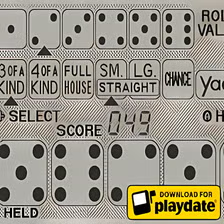
Yacht
Dice game
Explore 2 catalog records. Windows support, current availability and pricing are not independently confirmed. Profiles explain the distinction between game categories and actual product functionality.
Card and Dice GamesDice game
 Card and Dice Games
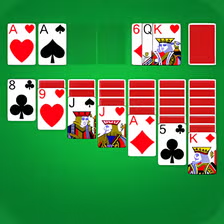
Solitaire card game
CATEGORY GUIDE
Yacht and Solitaire Classic Free are grouped by their general game mechanics. Yacht has a Playdate description that conflicts with the Windows category, while the solitaire record does not establish its exact variant. The grouping is an editorial convenience rather than a claim that both are confirmed PC releases.
Dice games commonly record combinations on a scorecard. Solitaire games involve arranging cards according to constraints that vary by variant. These rules explain the genres, but they do not prove the controls, visual layout, accessibility settings or saved-game behavior of either application.
A current review would identify the exact edition, platform, input methods and whether the game can operate without an internet connection. An authentic screenshot of the matching edition would help clarify layout and readability. A screenshot from another implementation would not resolve those questions.
The Card and Dice category contains Yacht and Solitaire Classic Free. These are familiar game concepts, but familiar rules do not guarantee that a particular software edition supports Windows. The Yacht entry refers to Playdate, a dedicated gaming platform. Solitaire Classic Free is presented as a Windows-associated card game in the source, although its exact publisher and current distribution require further evidence. Their inclusion reflects the reference catalog rather than a verified compatibility list.
The titles also illustrate two kinds of ambiguity. Yacht can refer to a physical dice game or one of several digital implementations. Solitaire Classic Free uses words common to many card-game products. Identifying the creator, store identifier and supported device is therefore necessary before attaching technical requirements or screenshots to either record.
In a traditional Yacht-style game, dice combinations contribute to categories on a scorecard. The interface of a digital adaptation might display a roll, the categories and accumulated points. In a common solitaire format such as Klondike, cards are arranged in a tableau and moved according to the rules toward foundations. Other solitaire variants use different arrangements. These examples explain the underlying formats rather than describe confirmed features of the two listed releases.
The visual demands of each format differ. A dice scorecard needs clear numeric labels and a way to distinguish completed categories. A card layout needs recognizable ranks and suits, readable spacing and clear indications of available positions. The actual implementations may solve these presentation problems in different ways. No interface assessment is claimed for either app without genuine evidence.
Traditional games often work without a network when played physically, but this does not establish offline functionality in software. A digital implementation may depend on account verification, advertising, synchronization or an online service. The correct answer for a given edition must come from its documentation or a properly recorded test. A free label likewise does not settle whether optional purchases or advertising exist.
Accessibility depends on more than whether a game has familiar rules. Mouse interaction, keyboard navigation, screen scaling and readable contrast are separate design properties. A handheld interface may be optimized for controls that do not exist on a desktop computer. For Yacht, the platform discrepancy is therefore a fundamental issue rather than a detail to be corrected by changing a system-requirements field.
Solitaire Classic Free is most useful as a starting point for identifying a particular card-game record. The source establishes the general category and free classification, while leaving the exact edition and feature inventory unresolved. Yacht is more appropriately treated as a cross-platform research entry until a matching creator page establishes whether a Windows edition exists.
The category also provides a useful contrast to social poker and casino-themed simulations. Card and dice formats can be described without assuming a persistent virtual balance or a shared online service. Conversely, their tabletop origins do not prove the absence of digital purchases. Readers can use the individual profiles to distinguish the genre context from the product-specific evidence. The eventual goal is a precise record of each edition, not a generic statement that every traditional game can be installed on a Windows PC.